7 Creative Project Mistakes That Stall Visionary Work (And How to Fix Them)
Lisa Spring

You have the idea. You can see it clearly enough to describe it out loud, and when you do, people lean in. So why is it still sitting in a folder called "eventually"?
Here is what I notice after years of working with busy professionals and entrepreneurs: the stall is rarely about talent or even time. It is almost always a small set of creative project mistakes that feel like sensible habits. You can't see them from inside because they look like discipline. They look like standards. They look like being realistic.
I coach from a simple premise. You already have what you need. The work is not to manufacture confidence or force inspiration; it is to create the conditions where your innate wholeness can show up in the work. And the mistakes below are the ways we accidentally block that.
Let's go through seven of them. For each, you get the concrete correction you can try today.
Mistake 1: Treating the Vision Like a Deadline
A vision and a deadline are two different animals, and they need different treatment.
A deadline is a commitment. It has a date, a scope, and a cost if you miss it. A vision is a direction. It is the reason the deadline matters at all.
When these two collapse into each other, something strange happens. You start measuring the vision's worth by the calendar, and any week where you don't hit the number feels like evidence that the idea was silly.
Example scenario: An entrepreneur I'll call Dana plans a signature workshop. She books a date three months out, then measures every single week against "is this ready yet?" By week four, she has a half-built landing page, a nervous stomach, and a quiet suspicion that she should just cancel.
The correction: Split the two documents.
- Write a one-page vision statement. No dates. What does this project make possible for the people it touches, and how do you want to feel while making it?
- Write a separate one-page plan with dates, owners, and the smallest viable version of each piece.
- Read the vision before you open the plan. Every time.
That second document changes. The first one anchors you. When the work feels heavy, nine times out of ten you have been reading the plan and calling it the vision.
Mistake 2: Waiting for the Feeling Before the Making
This one is so common it hides in plain sight. You wait until you feel clear, inspired, or at least not exhausted. Then you will make the thing.
The trouble is that clarity is often a byproduct of making, not a prerequisite. The first twenty minutes of messy work is what produces the feeling you were waiting for.
You do not need to feel ready to begin. You need a container small enough that beginning costs you almost nothing.
That is the whole game. Not motivation. Container.
What a container looks like in practice
A container is a specific, bounded invitation. Not "work on the project this week." Something like:
- Twenty five minutes in the morning with a blank page and no editing allowed.
- One voice memo recorded on a walk, no notes, no polish.
- Four index cards with one rough idea each, stuck on the wall.
Notice these are all small enough to survive a bad day. That is the point. A container you can honor on your worst Tuesday is worth more than an ambitious plan you honor twice.
Mistake 3: Polishing Before the Thing Exists
Polishing feels like progress. It is satisfying, it produces visible improvement, and it keeps you busy. It is also the most elegant way to avoid finishing anything.
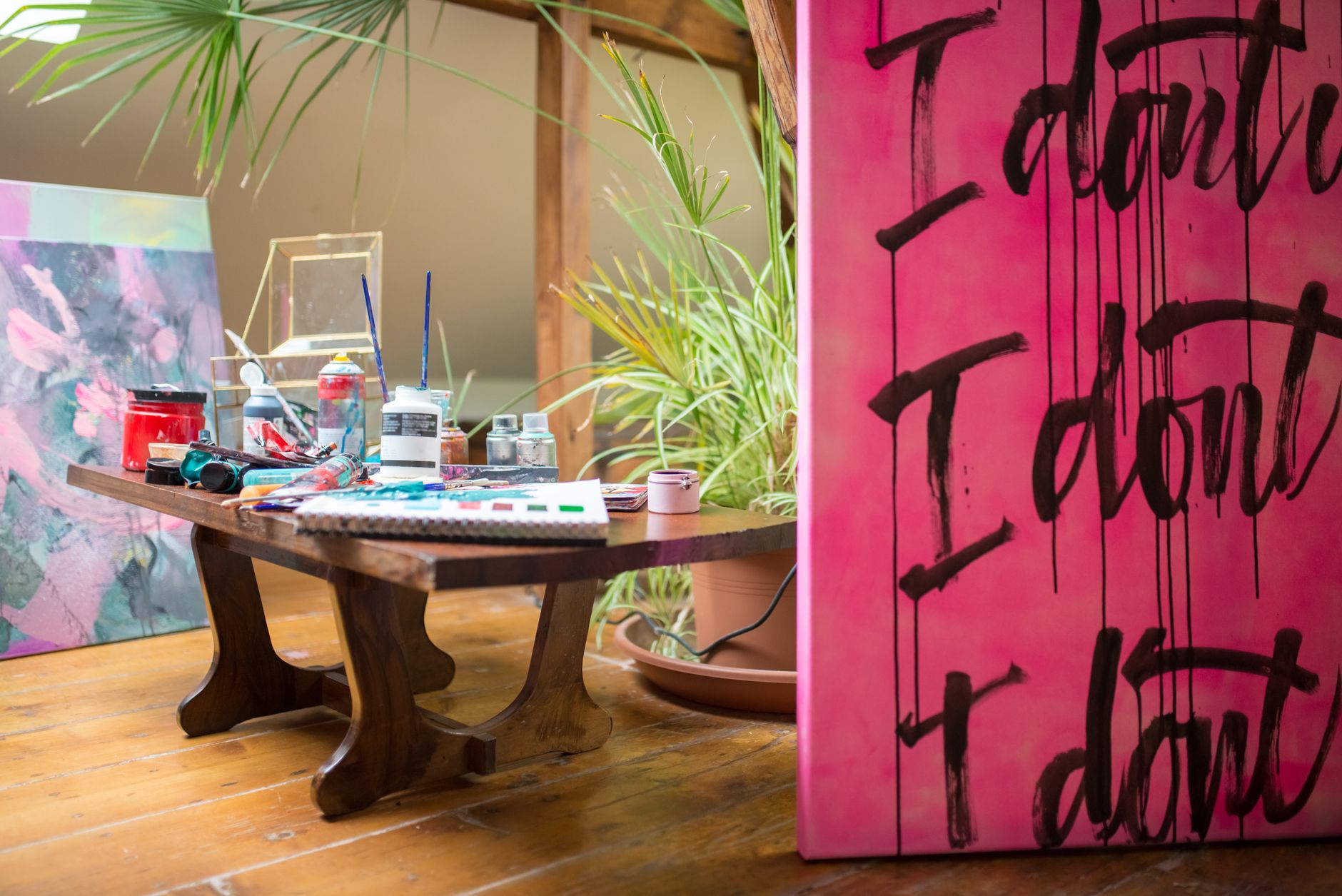
If you find yourself rewriting the same paragraph eleven times or redesigning a logo before you have ever explained the offer out loud, you are not refining. You are hiding.
The rough-first rule
In my own process and in the coaching work, I use one rule that solves a surprising number of stalls: the rough version has to exist before the polished version gets to be touched.
That means:
- Record the messy first draft, sketch, or outline. Do not edit it in the same sitting.
- Wait at least a day, then read it as a stranger would.
- Write three notes about what the work is actually trying to say.
- Only then decide what to refine.
Refinement without a rough version is decoration. Decoration is not a project.
Mistake 4: Building for Everyone
"Everyone" is not an audience. It is a way to avoid a decision that might be wrong.
When a project tries to serve everybody, it says nothing clearly to anybody, and you, the maker, carry the impossible job of pleasing a blur.
For entrepreneurs especially, this shows up in offers that list nine benefits and name no person. For creative professionals, it shows up in portfolios that display range instead of point of view.
The correction: Pick one person and write the project for them specifically. Give them a name, a job, and a problem they said out loud this month. Then make one deliberate choice that would delight them and mildly confuse someone else.
That last part matters. If nothing in your project could possibly confuse or exclude anyone, you have not chosen yet.
Mistake 5: Keeping the Vision in Your Head
An unspoken vision has to be carried, and carrying is expensive. It leaks energy all day. It wakes you at 3 a.m.
Visionary projects are usually too big to hold internally. They need to live somewhere you can walk around them.
| Where the vision lives | What it costs you | The correction |
|---|---|---|
| Only in your head | Constant background strain, fuzzy decisions, slow drift | One visible artifact: a wall sheet, a shared doc, a whiteboard |
| In a file you never open | Guilt every time you remember it exists | Move the one-page vision to a place you see daily |
| In a conversation you keep having | The idea improves, the work does not start | Convert the next conversation into a dated next step |
| In your head and someone else's | Two people, two versions, quiet misalignment | Write the shared version together, once, in plain language |
Put it where you can see it. A single page on a wall beats a brilliant plan in a buried folder, every time.
Mistake 6: Letting the Project Become a Performance Review
This is the mistake that does the most damage to people who care deeply about their work.
Somewhere along the way, the project stops being a thing you are making and becomes a verdict on you. Every session becomes a measurement of whether you are talented, disciplined, or worthy of the success you want.

Under that pressure, the nervous system does what it is designed to do. It protects you. It finds something safer to do. It calls it "research."
The correction: Separate the maker from the made.
Try this before your next work session. Say out loud, in plain words, that this version of the project is a draft and that drafts are allowed to be bad. Then set a timer and make something on purpose that is not your best. It sounds odd. It works because it removes the audit from the chair you are sitting in.
Wholeness is not a reward for producing well. It is the starting condition. When you create from that place, the work stops being a performance review and becomes an experiment you are genuinely curious about.
Mistake 7: Doing It Alone Because You "Should" Be Able To
Many capable people carry a private rule that needing help means something about them is lacking. So they grind alone, lose momentum, and quietly shelve projects that were never actually too hard. They were just unwitnessed.
Support is not a crutch. It is part of how creative work gets made.
Three levels of support, and when each one helps
- Witness. One person who knows what you said you would do this week. No advice required, no expertise needed. This alone clears a surprising amount of fog.
- Thinking partner. Someone who asks better questions than you ask yourself. Useful when the project is stuck in a decision you keep circling.
- Structure. A standing time, a group, or a coach who holds the arc of the work when your week gets loud. Useful when the project needs to move across months, not just days.
Match the level to the actual problem. If you are stuck because you keep changing the scope, more alone time will not fix it. If you are stuck because you cannot see the work clearly anymore, another planning document will not fix it either.
This is where group programs and workshops tend to earn their keep. Not because someone hands you the answer, but because the rhythm of showing up with other people keeps the work real.
A Short Reset You Can Run Today
You do not need to fix all seven mistakes this week. Pick one. I would suggest starting where the friction is loudest.
- Name the mistake. Write one sentence: "I have been ______, and it is costing me ______."
- Choose the smallest correction. Shrink it until it fits in twenty minutes. A one-page vision. A twenty-five minute container. One named reader. One message to a witness.
- Do it before you plan it. The correction comes first, so the plan is built on real momentum instead of hopeful theory.
- Tell one person. Send a short message tonight. What you are making, what you did today, what you will do next.
That is a twenty to thirty minute investment total. It is not a system. It is a restart.
What Changes When You Stop Making These Mistakes
When vision and deadline are separated, planning stops feeling like judgment. When the container replaces the feeling, sessions happen on ordinary days, not just inspired ones. When the rough version exists first, polishing becomes a choice instead of a hiding place. When one person is named, the work sharpens. When the vision lives somewhere visible, decisions get faster. When the maker is separated from the made, curiosity returns. When support is normal, projects survive busy months.
None of this requires you to become a different, more disciplined person. It requires you to stop treating your wholeness as something you have to earn before you are allowed to create. Busy professionals and entrepreneurs do not need more pressure. They need cleaner conditions.
So pick one mistake. Choose the smallest honest correction. Do it today, before the week fills up and the idea goes back into the folder called "eventually." The project is not waiting on your readiness. It is waiting on your next twenty minutes.

